![[24]7.ai](https://www.247.ai/wp-content/uploads/2021/07/247ai-Black.svg)
![[24]7.ai](https://www.247.ai/wp-content/uploads/2024/09/247ai-Black.svg)
Customer Experience Management, or CEM, has become one of the biggest differentiators for brands today. It’s no longer just about offering a good product or solving problems quickly. The real value lies in understanding how customers feel at every stage of their journey and shaping those experiences in ways that build loyalty and long-term growth. In fact, McKinsey reports that organizations prioritizing customer experience see 2–7% higher sales revenue and 1–2% higher profitability.

What Is CEM?
It is the process of managing all interactions a customer has with a brand across every touchpoint. It focuses on designing experiences that meet expectations, strengthen satisfaction, and turn customers into advocates.
While often confused with CRM or customer service, CEM takes a broader, proactive approach. CRM helps manage relationships and data, while customer service focuses on resolving issues. CEM combines both to ensure that every experience, from first impression to repeat purchase, feels consistent and meaningful.
How Does CEM Work?
It works by analyzing and optimizing the customer journey in real time. It starts with mapping how customers move from awareness to advocacy. Then, it gathers feedback and data from multiple channels to understand what matters most. This insight helps brands improve processes, tailor interactions, and reduce friction.
Technology plays a major role here. AI and automation allow brands to predict customer needs, route queries to the right agents, and deliver seamless conversations across voice, chat, and digital platforms. Instead of reacting to issues, businesses can now anticipate them.
Why Is CEM Important for Brands?
Customer expectations are always a top priority. A single poor experience can send a customer to a competitor, while a great one can drive repeat business and referrals. Companies with strong experience strategies enjoy higher retention, greater lifetime value, and stronger advocacy.
CEM directly supports revenue growth. Happy customers spend more, stay longer, and promote the brand organically. It turns service from a cost center into a profit driver.
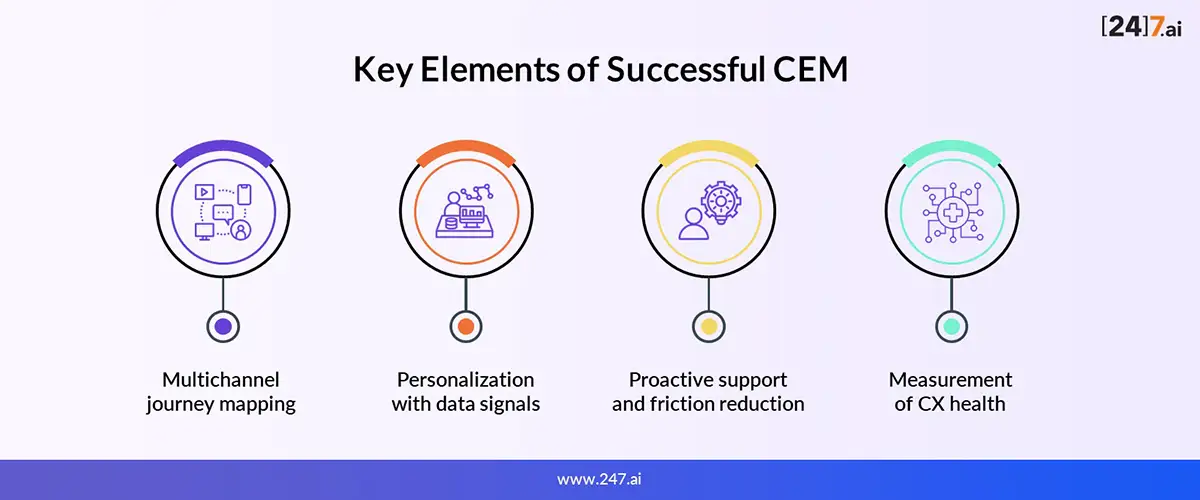
Key Elements of Successful CEM
- Journey Mapping: Understanding every touchpoint to identify moments that matter.
- Personalization: Using data signals to deliver relevant messages and offers.
- Proactive Support: Anticipating issues before they affect satisfaction.
- CX Measurement: Tracking performance with NPS, CSAT, and other key indicators.
These pillars help brands stay consistent, empathetic, and responsive across every interaction.
The Role of AI and Automation in CEM
AI and automation are transforming how brands manage customer experiences. From self-service chatbots to intelligent routing and predictive analytics, these technologies help businesses operate faster and smarter.
AI-powered tools can identify intent, suggest solutions, and guide agents with real-time insights. This creates a balance between speed and empathy. Therefore, customers get answers quickly, while agents focus on delivering value-driven support.

Customer Experience Management with [24]7.ai
For businesses looking to move from strategy to action, [24]7.ai offers one of the most advanced CEM platforms available today.
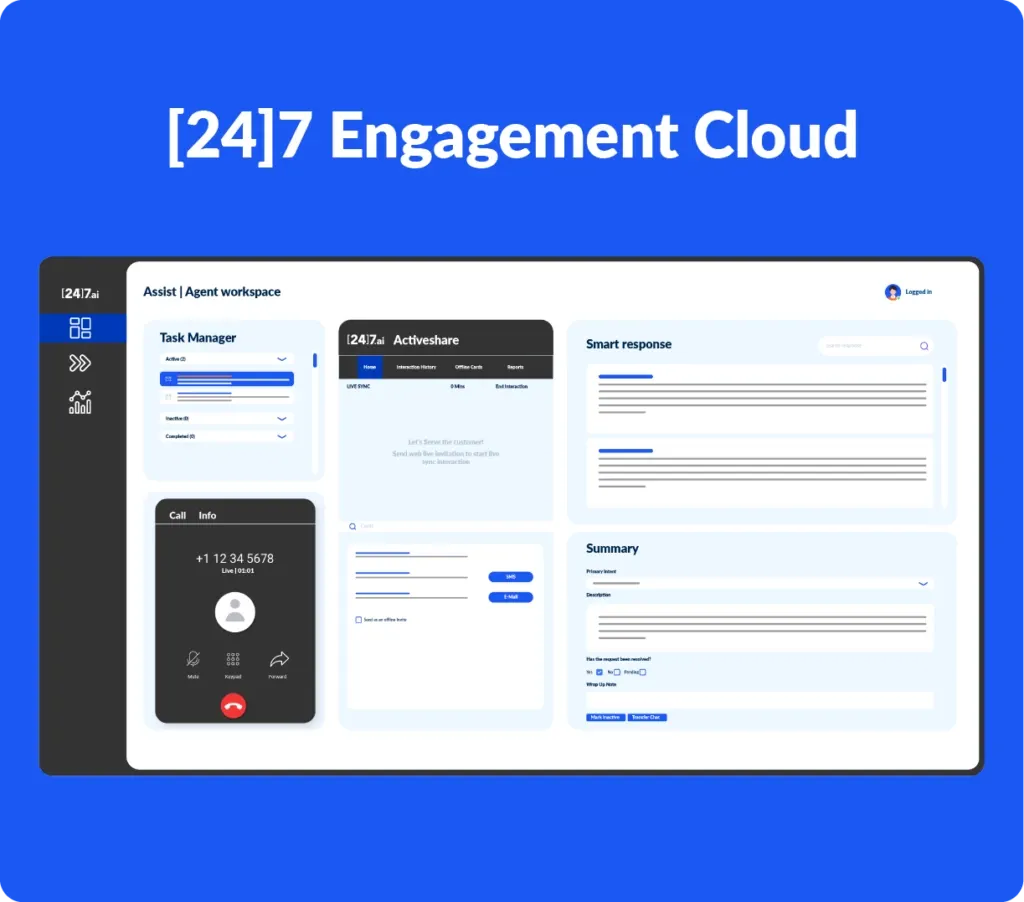
[24]7.ai’s Engagement Cloud unifies customer interactions across channels, blending decades of contact center expertise with next-generation AI. It enables brands to deliver consistent, intelligent, and emotionally aware experiences through features such as:
- Proactive messaging and visual conversation design
- Real-time agent assist and conversation analytics
- CRM and agent interface integrations
- Automated summaries and AI copilots
The results speak for themselves. Clients have achieved a 78% rise in right-party contacts, a 3% sales lift, and $1.8 million in incremental revenue.
[24]7.ai also continues to innovate in areas such as AI agent training, performance dashboards, digital campaign scaling, and self-service automation, therefore helping brands strengthen both customer and employee experiences.
Best Practices for Implementing CEM
To build a strong foundation for CEM, start by listening to your customers across all channels. Invest in platforms that unify data and interactions and foster a company-wide culture that prioritizes customer outcomes.
Track the right metrics, act on insights, and adapt as expectations grow. Platforms such as [24]7.ai’s Engagement Cloud make it easier to connect these efforts, creating a single, intelligent system that continuously improves experience quality.
Final Thoughts
CEM is not a one-time initiative but an ongoing commitment to understanding and improving every customer interaction. When powered by data, technology, and empathy, it becomes a key driver of loyalty and growth.
Brands ready to elevate their CX maturity can explore how [24]7.ai’s solutions bring this vision to life by transforming experiences that delight customers and strengthen business results.
Frequently Asked Questions
CRM focuses on managing customer data and relationships, while CEM focuses on the overall experience customers have with a brand across all touchpoints.
Data silos, lack of unified platforms, and limited real-time insight are major barriers. Integrated solutions such as [24]7.ai’s Engagement Cloud help overcome these.
AI helps brands personalize engagement, predict customer needs, automate routine tasks, and provide faster, more relevant support.
Yes. Even smaller brands can use scalable CEM tools to streamline service, build loyalty, and compete with larger players.
Key metrics include Net Promoter Score (NPS), Customer Satisfaction (CSAT), Customer Effort Score (CES), and customer lifetime value.