![[24]7.ai](https://www.247.ai/wp-content/uploads/2021/07/247ai-Black.svg)
![[24]7.ai](https://www.247.ai/wp-content/uploads/2024/09/247ai-Black.svg)
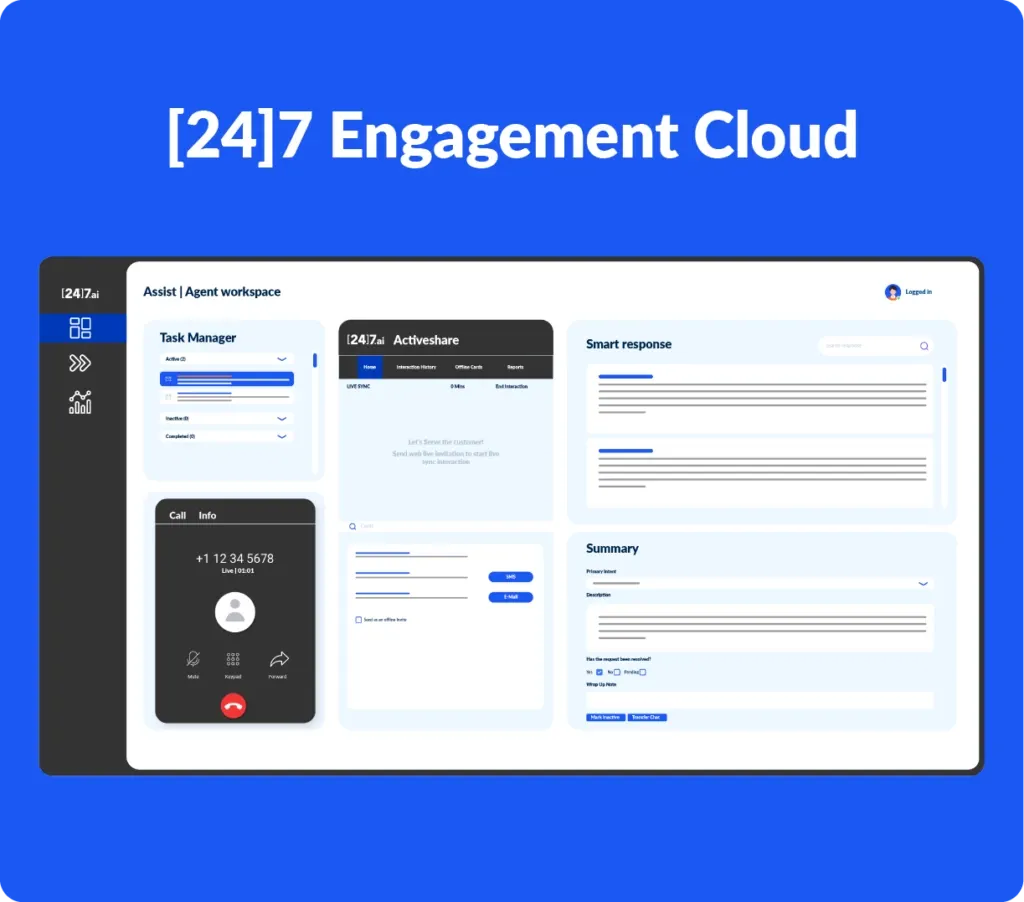
Table of contents
- Introduction
- What is Ecommerce Customer Support Outsourcing?
- Why Do Ecommerce Businesses Outsource Customer Support?
- What Services Are Included in Ecommerce Customer Support Outsourcing?
- How Does Ecommerce Customer Support Outsourcing Work?
- What are the Benefits of Ecommerce Customer Support Outsourcing?
- What are the Common Use Cases?
- Ecommerce Customer Support Outsourcing vs In-House Support
- What Should You Look for in an Ecommerce Support Outsourcing Partner?
- What are the Challenges of Ecommerce Customer Support Outsourcing?
- How is AI Transforming Ecommerce Customer Support Outsourcing?
- How [24]7.ai Supports Ecommerce Customer Support Outsourcing
- Final Thoughts
- FAQs
Ecommerce moves fast. Orders come in at midnight, customers want updates by morning, and one bad support experience gets shared before your team even knows it happened.
Handling that in-house is doable. Scaling it without breaking something is the harder problem.
What is Ecommerce Customer Support Outsourcing?
It’s exactly what it sounds like. You partner with a specialist to run your customer support operations, across every channel, at whatever volume your business throws at them, without you having to build or maintain the infrastructure yourself.
Orders, returns, complaints, post-purchase questions. All of it covered, with the ability to scale when things get busy.
Why Do Ecommerce Businesses Outsource Customer Support?
Because building it in-house gets complicated fast.
Peak season doubles your volume overnight. Customers shop at 2 AM and expect a response before breakfast. Returns and delivery issues don’t slow down just because your team is stretched.
Hiring enough people to handle all of that, training them properly, keeping quality consistent, and doing it around the clock costs more than most businesses want to spend on support infrastructure. Outsourcing takes that problem off the table.
What Services Are Included in Ecommerce Customer Support Outsourcing?
More than most people expect when they start looking into it.
Order tracking and delivery updates. Returns, refunds, and exchanges. Product questions. Payment and billing issues. Complaints. Live chat, email, phone, and social media.
The full post-purchase journey, basically. Every place a customer might reach out, covered.
How Does Ecommerce Customer Support Outsourcing Work?
Customer contacts you through whatever channel they prefer. That interaction goes to the outsourced team, who already have access to your order data, your CRM, your inventory systems.
They handle it. If it needs to go further, it gets escalated. Everything gets logged and reported back to you.
When it works well, customers have no idea the team isn’t internal. They just know someone actually helped them.
What are the Benefits of Ecommerce Customer Support Outsourcing?
Customers get help at any hour without you needing to staff for it around the clock.
Response times improve because the team is built specifically for this. Resolution is faster because they’re connected to the systems that hold the answers.
Costs stop being fixed and start moving with your volume. You’re not paying full salaries through a quiet January to be ready for a busy December. You scale up when you need to and pull back when you don’t.
And consistency improves across the board. The quality of service a customer gets stops depending on who picked up, what time it is, or how the team is doing that day.
What are the Common Use Cases?
Day-to-day order management is the baseline. But outsourcing really earns its keep when things get intense.
Black Friday. A product launch that goes bigger than expected. A supply chain issue that triggers a flood of delivery queries. Volume that would genuinely overwhelm an internal team gets absorbed without the wheels coming off.
Global operations needing multilingual support. Post-purchase engagement that turns a first-time buyer into someone who comes back. These aren’t special cases for most ecommerce businesses. They’re just Tuesday.
Ecommerce Customer Support Outsourcing vs In-House Support
In-house feels safer because it feels more controllable. But that control comes with costs that don’t flex. Salaries, benefits, training, tools, management. All running whether your queue is full or empty.
Outsourcing trades some of that direct control for flexibility that actually works better for customers. Costs move with volume. Coverage extends without a capital investment. And quality, which used to be the real concern, is much less of a problem now with proper onboarding and AI keeping an eye on performance across every interaction.
What Should You Look for in an Ecommerce Support Outsourcing Partner?
Don’t go by the website. Everyone’s website says the same things.
Ask for real examples from ecommerce businesses like yours. Find out what their AI actually does in production, not what it does in a demo. Make sure they can integrate with Shopify, Magento, or whatever you’re running. Get the security documentation and actually read it.
Push for SLAs that are specific and measurable. Vague commitments about quality sound reassuring and mean nothing when something goes wrong.
What are the Challenges of Ecommerce Customer Support Outsourcing?
Getting the brand voice right takes longer than people expect. External teams need real training, clear guidelines, and honest feedback after go-live, not just during onboarding.
Data privacy needs to be sorted from day one. Know where customer data sits, who can access it, and what happens if there’s an issue.
Integration is rarely as straightforward as it looks. The more complex your tech stack, the more upfront planning the integration needs.
And performance management doesn’t run itself. Clear KPIs, regular check-ins, and transparent reporting matter from the start, not once something goes wrong.
How is AI Transforming Ecommerce Customer Support Outsourcing?
AI is what makes modern outsourcing genuinely different from what it used to be.
Routine queries get resolved automatically with no wait and no agent needed. Complex ones get routed to the right person immediately. Human agents get real-time suggestions during live conversations so they perform better even on queries they haven’t seen before.
And predictive support is becoming real. Systems that catch a potential issue before the customer reaches out, and in some cases fix it before they even notice.
How [24]7.ai Supports Ecommerce Customer Support Outsourcing
We’ve built this for ecommerce businesses dealing with real complexity. High volumes, multiple platforms, seasons that spike hard, customers who expect a lot.
Our platform connects to the systems you already run. Automation handles the volume. Our people handle what automation shouldn’t touch. We’ve done this across retail and ecommerce long enough to know where things go wrong before they do.
Explore how [24]7.ai can help you build ecommerce customer support that holds up when it actually matters.
Final Thoughts
Outsourcing customer support isn’t about spending less on service. It’s about building something that can keep up with your business without becoming a problem in itself.
The right partner handles the volume, keeps the quality consistent, and gives your team back the time to focus on growth. That’s worth investing in.