![[24]7.ai](https://www.247.ai/wp-content/uploads/2021/07/247ai-Black.svg)
![[24]7.ai](https://www.247.ai/wp-content/uploads/2024/09/247ai-Black.svg)
Call a company’s support line today and there’s a good chance you already know how it goes. A recorded voice reads you a list of options, none of them quite fit your problem, you press something anyway, wait on hold, get transferred, and then explain your issue all over again to the person who finally picks up.
It’s the same experience people have been complaining about for 20 years. And businesses are finally doing something about it.
AI for call centers is already running inside contact centers at banks, hospitals, retailers, and telecom companies. Not as a test. As the actual system taking calls. This is what it is and how it works.
So What Is Call Center AI?
It’s software that handles customer service conversations using AI. Calls, chats, emails, all of it. It’s not one thing. It’s a few different technologies that work together. One piece listens to what the customer says and converts it to text. Another works out what they are actually asking for. Another one connects to your systems and does something about it, all while the customer is still on the line.
The whole point is to handle more issues without sending every single call to a human agent. That’s the core promise of AI for call centers and when it’s set up properly, it delivers on it.
What Actually Happens When a Customer Calls?
A customer calls about a billing problem. The second they start talking, the system is listening, converting speech to text, and figuring out what they need, not just matching keywords but understanding the actual request.
If the customer changes direction mid-call or asks about something else, the system stays with them. It doesn’t reset or get confused.
Once it knows what needs to happen, it goes and does it. Pulls the account, checks the billing history, fixes the issue or flags it. If it needs to pass the call to a human, it does that too, but with a full summary already written up so the agent knows exactly what happened before they say hello.
That part is more important than it sounds. The customer doesn’t repeat themselves. The agent isn’t starting blind. That’s already a better experience than most support calls deliver right now.

The Technologies Behind It
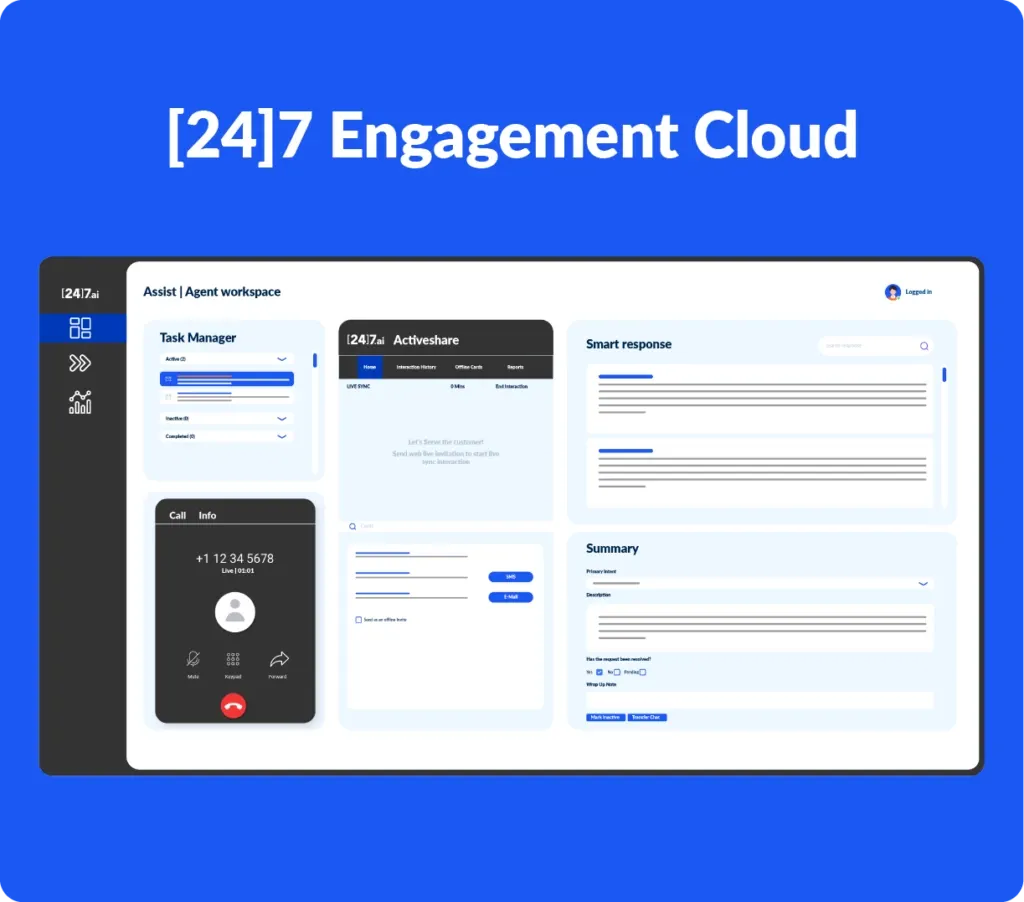
Voice bots take calls from start to finish. They handle real back and forth conversation, confirm who the customer is by their voice, switch between languages mid-call if needed, and write up a summary the moment the call ends.
Robotic process automation handles the boring repetitive work that eats up agent time. Updating a record, raising a ticket, processing a refund. You don’t need to understand language. It just follows a set of rules and does the task fast, every time, without mistakes.
Agent assist sits quietly in the background when a human agent is on a call. It’s listening to the conversation and putting the right information on the agent’s screen in real time. The agent doesn’t need to search through four different systems while the customer waits. It’s already there.
Automated QA goes through every call the team handles. Not a sample. All of them. It picks up on compliance issues, tone problems, anything that was missed or handled wrong, across the full volume without anyone having to sit and listen back.
How Is This Different from IVR?
IVR gives customers a menu. Press 1 for billing. Press 2 for technical support. If their issue doesn’t fit neatly into an option, they are stuck waiting for a human or they hang up.
AI for call centers lets customers describe their problem naturally and actually understands what they are saying. It doesn’t need someone to go in and rewrite the logic every time a product changes or a new issue comes up. It picks things up from real conversations over time.
You can see the difference in abandonment rates. People drop IVR calls because they hit a wall. A decent AI system keeps the conversation moving until there’s an actual answer at the end of it.
What Catches People Off Guard
Accent and background noise coverage is better than it used to be but it’s still not perfect. The benchmark numbers vendors put in front of you often look cleaner than what happens with your actual callers. Test it with real customers before you commit to anything.
The handoff between AI and human is where more deployments go wrong than people expect. If the system transfers a call with no context attached, the customer has to start the whole conversation over. That’s a worse experience than the IVR you are replacing. A proper transfer carries everything, the full conversation, what was resolved, what wasn’t, so the agent walks in knowing exactly where things stand.
Integration takes longer than vendors suggest. It’s rarely the AI holding things up. It’s usually messy data sitting in legacy systems that nobody’s touched in years.Compliance isn’t something you add at the end either. Voice data falls under GDPR, CCPA, and the EU AI Act. Enforcement in 2026 is tighter than it’s ever been. It needs to be built in from day one, not retrofitted after go-live.
Where Is This All Going?
How [24]7.ai Fits Into This
[24]7.ai puts together intent recognition and conversational AI built specifically for enterprise customer service. It connects into your existing systems, handles large call volumes without breaking down, and is built by people who have actually worked through what complex enterprise deployments involve on the ground.
If you are working out where AI for call centers fits into your customer service setup, it’s worth a closer look.