![[24]7.ai](https://www.247.ai/wp-content/uploads/2021/07/247ai-Black.svg)
![[24]7.ai](https://www.247.ai/wp-content/uploads/2024/09/247ai-Black.svg)
What is CX Management & Why is it Important?
CX management is taking control of every interaction a customer has with your brand. Not just support. Every ad, every onboarding email, every invoice, every renewal.
Most companies manage these in silos. Marketing owns one piece. Support owns another. The customer feels every gap.
CX management connects it all into one experience.
The business case is straightforward. Bain & Company found CX leaders grow revenue 4–8% faster than competitors. Customers with excellent experiences are 3.5x more likely to buy again. Good CX isn’t just good service, it drives real revenue.
What are the Key Components of CX Management?
What are the KPIs of CX Management?
Set your baseline before going live. No baseline means no way to prove results later.
Customer sentiment. NPS measures loyalty like above 50 is really strong. CSAT tracks satisfaction after interactions. CES measures how easy it was to get help. Low effort means higher loyalty.
Operational efficiency. FCR is the one to watch. Every 1% improvement cuts operating costs by roughly 1%. AHT and resolution speed matter too — but FCR tells you if the problem was actually solved.
Business impact. CLV, churn rate, revenue per interaction. If CX scores improve but these don’t move then something’s off in the strategy.
Best Practices for Developing a CX Strategy
Design for the customer, not your org chart. Most CX problems exist because processes were built for internal convenience. Start with the journey instead.
Make it everyone’s job. Support can’t own CX alone. Marketing, product, and ops all shape the customer experience. Shared accountability is what makes it stick.
Close the feedback loop. Collecting feedback and ignoring it is worse than not asking. Act on what customers say. Let them know when something changed because of them.
Personalize. 66% of customers will leave a brand that doesn’t personalize, according to Salesforce. It’s not a bonus anymore, it’s expected.
Keep improving. CX isn’t a one-time project. Regular reviews catch friction early before it turns into churn.
What are the Best Tools for CX Management?
Don’t stack tools. Build a connected system where data actually flows.
CCaaS platforms bring voice, chat, email, and messaging into one place with automation and analytics built in.
CRMs such as Salesforce and HubSpot centralize customer data. Most powerful when connected to your support tools and not sitting separately.
VoC platforms such as Qualtrics and Medallia turn feedback into something actionable.
Conversational AI handles repetitive queries at scale so agents focus on work that needs them.
Interaction analytics covers every conversation, not a 2% QA sample. Trends, risks, coaching gaps all surface automatically.
[24]7.ai CX Management Solution
[24]7.ai has been operating contact center operations for over 25 years, combining platform capabilities with real-world CX expertise.
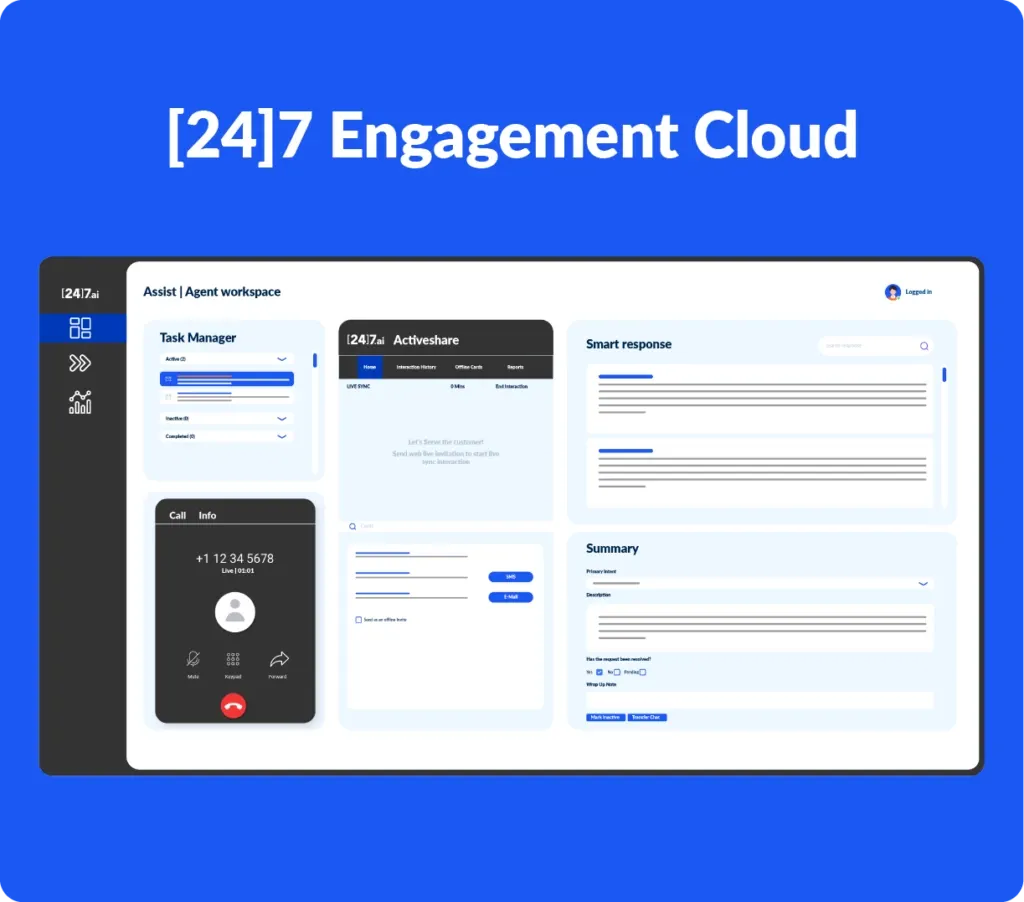
Its platform, [24]7 Engagement Cloud, includes conversation automation, agent assistance, campaign management, and interaction analytics in one system. That reduces integration complexity while improving visibility across customer interactions.
The platform’s AI-powered automation handles real conversations rather than rigid scripted flows. Agent assist tools surface relevant answers in real time, while analytics evaluate 100% of interactions instead of limited samples.
[24]7.ai also received multiple Gold Awards at the US Customer Experience Awards 2024 for Best Contact Center and Best Customer Service.
Worth considering for enterprises managing high customer volumes across multiple channels.
Final Thoughts
CX management isn’t about being the friendliest brand around. It’s about building a system where good experiences happen consistently.
The companies winning at CX understand their journey, measure what matters, and keep improving. The ones struggling are reactive, siloed, and blind to what customers actually experience.
The gap between the two is a strategy. And it’s fixable.