![[24]7.ai](https://www.247.ai/wp-content/uploads/2021/07/247ai-Black.svg)
![[24]7.ai](https://www.247.ai/wp-content/uploads/2024/09/247ai-Black.svg)
Your agents have thousands of conversations every day. Customers explain what’s wrong, agents respond, the problem gets sorted or it doesn’t, and the call ends. Then it’s gone. Nobody listens to it again unless something blows up later.
That’s how most contact centers have run for years. Teams review maybe 1 to 2 percent of calls manually. The other 98 percent just sits there. All the information about why people are calling, what’s annoying them, where agents are struggling, none of it gets looked at.
Speech analytics contact center tools fix that. Here’s what it is and why more teams are using it.
What Is Speech Analytics?
How Does It Work?
It starts with converting speech to text. Then machine learning takes over to understand context, not just the words used. It works out intent and outcome.
Here’s where the scale matters. A 50-agent team handling 200 calls each a month produces around 10,000 conversations. A manual QA team might get through 100 to 200 of those. A speech analytics contact center setup goes through all 10,000. Automatically. Nobody has to sit through recordings.
It also catches things while they’re happening, not just after. Compliance risks get flagged in real time. Coaching opportunities show up on their own. Some platforms can even flag which calls are likely to end in a complaint or a customer walking away.
What Does It Actually Catch?
It picks up the calls that went badly and the ones that went well, and tracks sentiment by product, agent, time of day, whatever you need. That level of detail just isn’t possible with a small QA team checking a handful of calls a week.
By 2026, transcription and sentiment analysis aren’t special features anymore. Every platform has them. What separates the good ones now is what happens after. The better systems connect speech data straight into QA, coaching, and CRM tools, so it actually changes how the team works instead of sitting in a dashboard nobody opens.
Why Teams Are Investing In It Now
Customers expect fast, personal, accurate help on every call. Most contact centers know this and are still struggling to deliver it because of manual processes and systems that don’t talk to each other.
That gap, the “why” behind complaints, is exactly what speech analytics surfaces. Instead of guessing why a product gets more complaints than another, or why a script isn’t landing, you see it directly in the conversation data.
It’s also not optional for much longer. The global speech analytics market is on track to pass $7.4 billion by 2030. Teams sitting this out are going to fall behind the ones who aren’t.
Where It's Headed
Speech analytics used to be something you checked after the fact. That’s shifting. The direction now is real-time agent assist, alerts and coaching that happen while the call is still live, not the next morning in a report.
That timing difference is the whole point. Insights that show up after the call ends can’t change anything about that call. A speech analytics contact center setup that catches a compliance issue mid-call, while the agent can still fix it, is worth a lot more than the same insight delivered a day later.
How to Actually Get Value From It
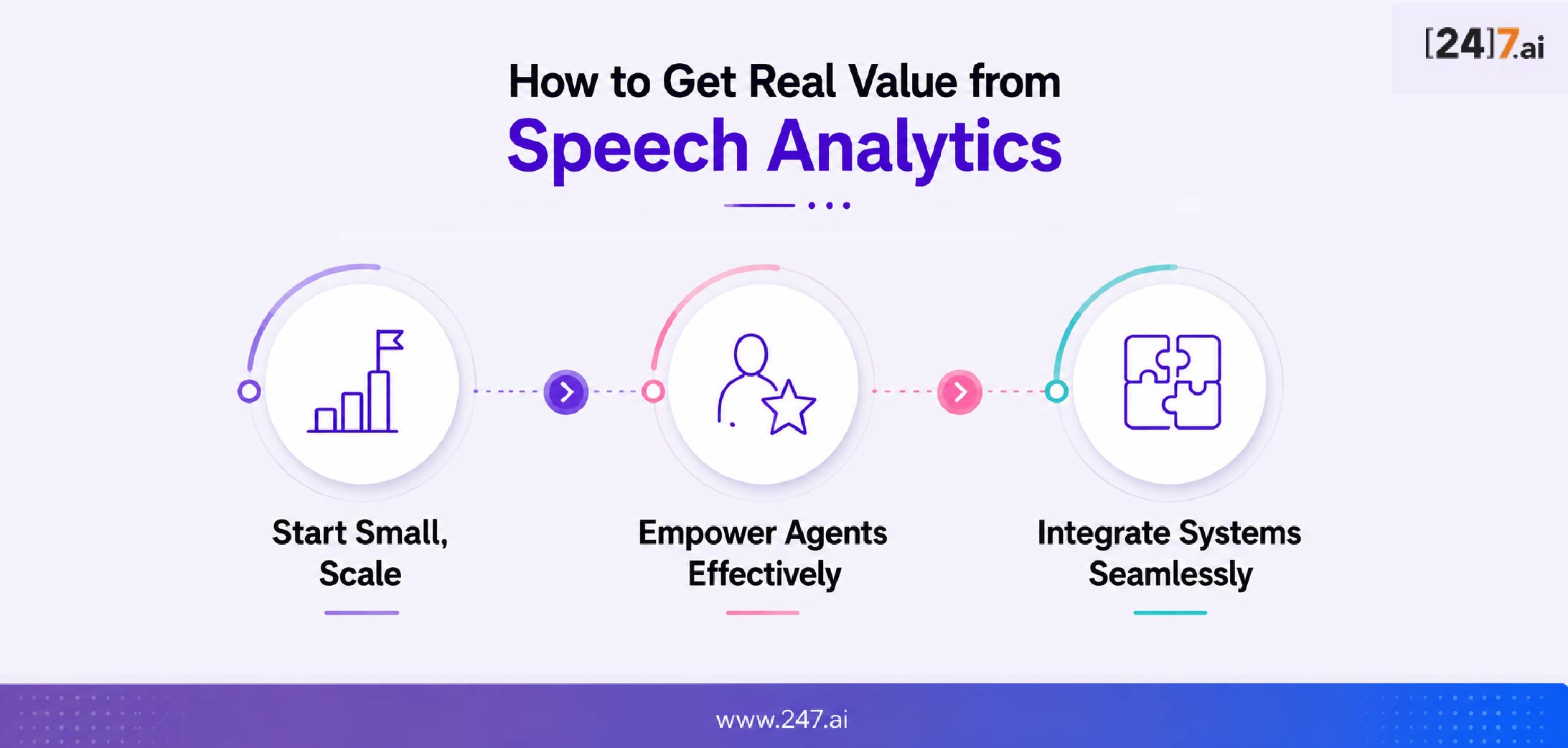
Don’t try to deploy everything at once. Pick one use case, something like reviewing negative sentiment calls to find out what’s actually driving complaints. Prove it works there first.
Bring agents into it instead of around it. If the tool feels like surveillance, agents resist it. If it feels like something making their job easier, like fewer things to remember mid-call, they’ll actually use it.
And check what you are already running before adding another tool on top. Separate vendors for your CCaaS platform, speech analytics, and QA usually means data sitting in silos that don’t connect. One platform that handles speech analytics contact center needs alongside your existing systems tends to work better in practice.
The Bottom Line
Most of what happens on a support call goes unreviewed. That’s the majority of your customer conversations with zero visibility into them.
A speech analytics contact center setup closes that gap. It reviews everything, flags what matters, and increasingly catches problems while they’re still happening instead of after. The teams that get ahead here are the ones actually listening to what their customers are saying, not the ones with the most calls answered.